
Recent events – like artists inviting Palestine activists on stage to festival organisers banning politically outspoken acts – have put music and political activism at the forefront of cultural debates again.
Most prominently, Irish rap trio Kneecap have faced police investigations and media backlash for their pro-Palestinian stance – with the BBC even going as far as classifying their Glastonbury set as ‘high risk’ and choosing not to broadcast it live.
This backlash is part of a broader pattern – a stark warning to artists who dare to speak truth to power. It highlights how artists face resistance, suspicion, hostility, and even censorship when using their platforms to speak out about political issues.
When music is muted for its outspokenness on politics, it signals a broader attack on free expression.
Silencing these voices isn’t just an attack on politics, but a threat to music itself. Political engagement is a big part of music’s soul, and ignoring this means ignoring the weight music holds to shape society.
It’s not just about artists being met with backlash – it’s a warning sign for all of us. When music is muted for its outspokenness on politics, it signals a broader attack on free expression. Stifling political voices in music is not just an artistic loss, but often a first step in creating a path for authoritarianism to tighten its grip on our society at large.
It’s absolute cowardice to say, ‘I’m not political. I don’t want to use my platform in that way. I’m just an artist.’ Yeah, well, your art’s not going to survive either, because this will come for all of us, because fascism will come for all of us.
Millie manders
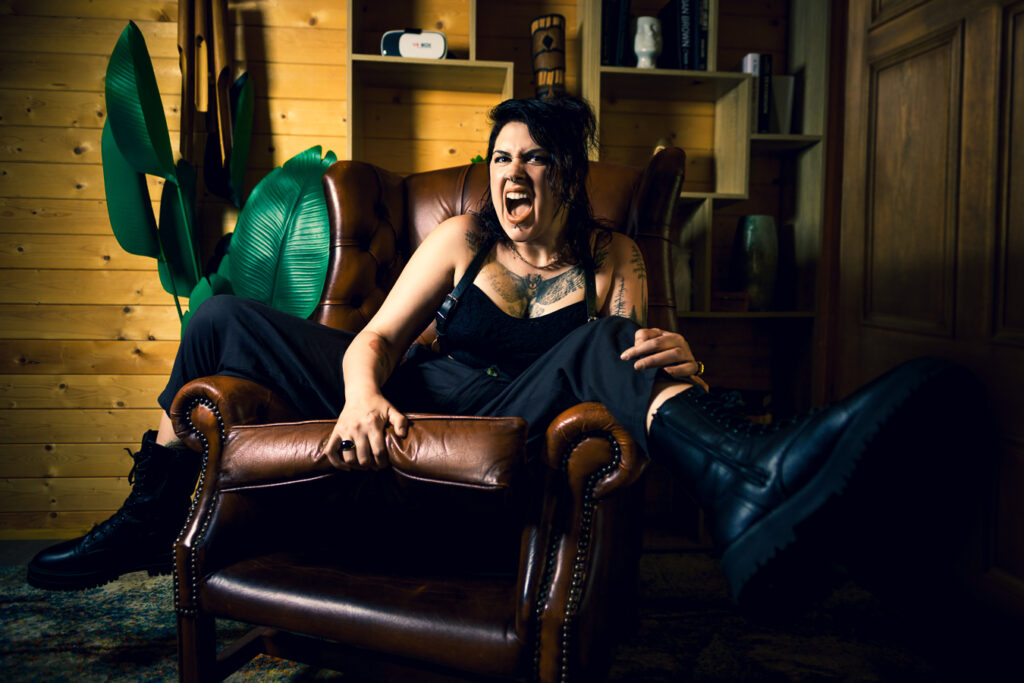
Singer and songwriter Millie Manders has a clear stance: “I think that anybody with a platform at the moment has a right to scream about what’s happening, and to further incentivise people who don’t have a platform to speak out.”
“We need everybody shouting right now, especially about what’s happening in Palestine,” she adds.
Despite receiving death threats and thus having to add more security to her shows, for Manders, staying silent is not an option. She further stresses how it’s not just about choosing a side, but about responsibility:
“It’s absolute cowardice to say, ‘I’m not political. I don’t want to use my platform in that way. I’m just an artist.’ Yeah, well, your art’s not going to survive either, because this will come for all of us, because fascism will come for all of us.”
In short, claiming that art should remain apolitical is a luxury only those untouched by oppression may afford.
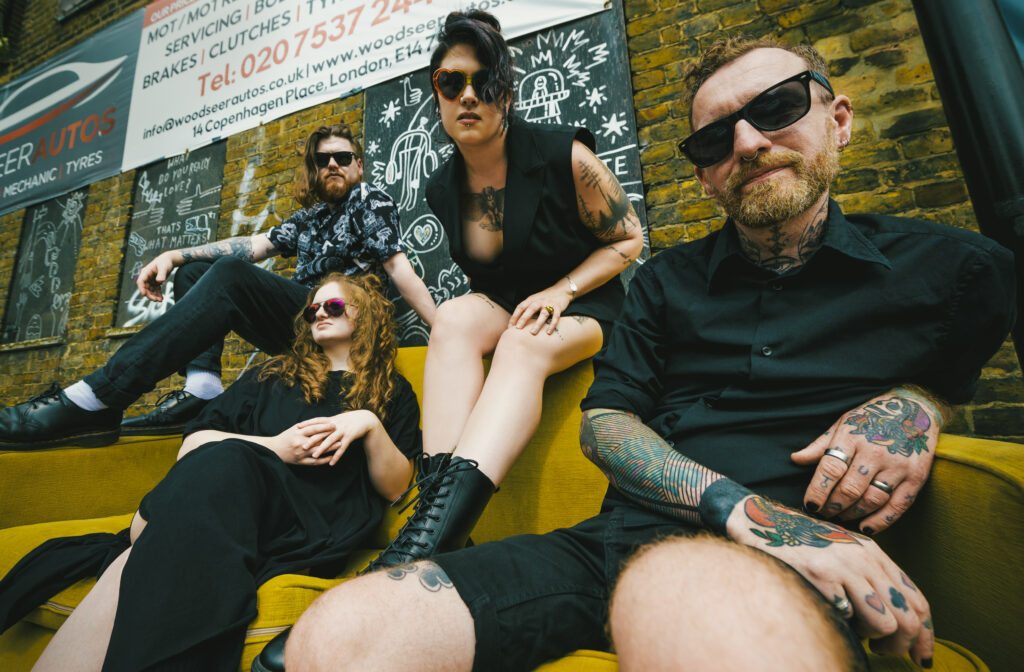
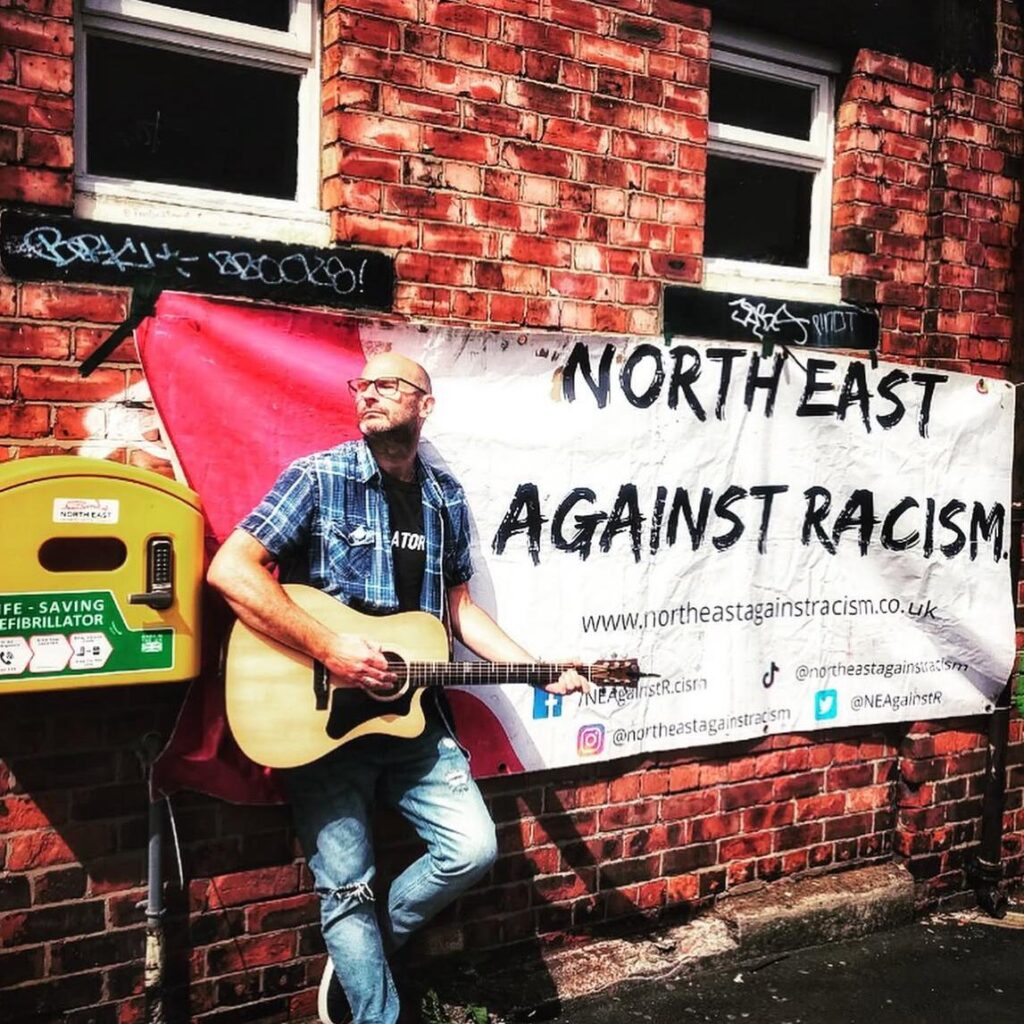
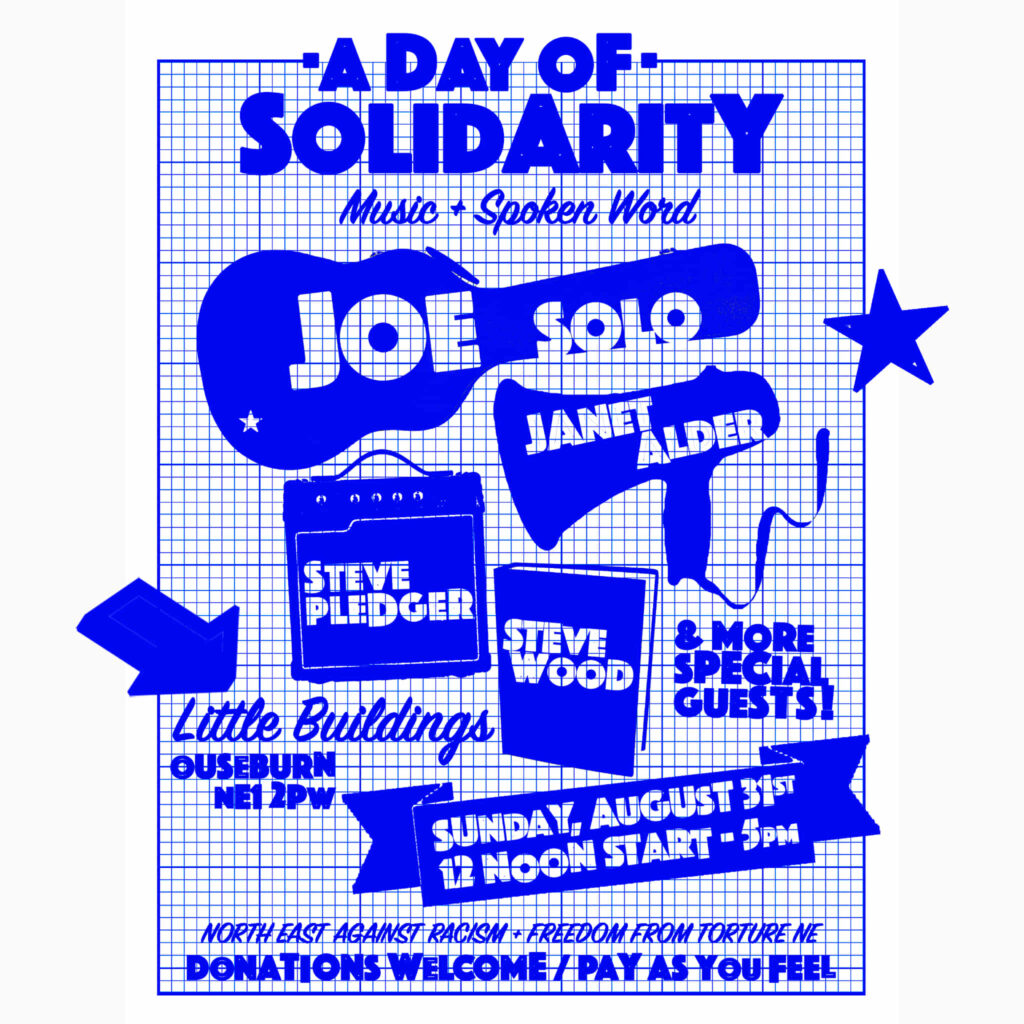
While Manders channels her fight for justice through her songwriting, Newcastle activist Ricky Thamman finds purpose in grassroots organising – sourcing musicians for North East Against Racism (NEAR) events and building local spaces for collective spirit.
“I think it’s just a solidarity thing, just to bring people together, carrying on that spirit from nearly 50 years ago now.”
With the world nowadays feeling so divided, Thamman also wants to see a renaissance of political music: “I feel like there needs to be a bit of a rebirth, given how polarised society is now with all the extremities that are going on.”
This is more than nostalgia for a punk revival – it’s a wake-up call. If music stops being a battleground for resistance and speaking up about social injustices, the cost isn’t just political apathy, but also the death of the very essence that music carries.
Grassroots events have historically been a great starting point for wider movements to follow. From Rock Against Racism (RAR) gigs throughout the UK’s late 70s to benefit concerts in support of the miners’ strikes, or the bigger stage of Live Aid 1985 – music can be the launchpad of national or even global conversations.
Grassroots communities like NEAR may be even more vital than ever right now, given how fragmented the music industry has become.
Dr Adam Behr, Reader in Music, Politics and Society at Newcastle University, points out: “There’s always going to be political music. It’s just a question of the extent to which it crosses over into the mainstream. But crossing the mainstream is much more fragmented now than it was in the 1970s or 1980s.”
Political music doesn’t necessarily need a headliner slot at a music festival to have an impact. DIY and grassroots spaces like NEAR can serve as local breeding grounds for solidarity, resilience, and resistance.
However, the relationship between music and politics is rarely straightforward. History shows a plethora of songs co-opted by political campaigns whose creators oppose. Some examples include Bruce Springsteen’s “Born in the USA”, which has been used to promote patriotism despite its critical lyricism, or The Clash’s “White Riot”, misrepresented as an endorsement of white supremacy. Clearly, this is a frustrating phenomenon for any musician.
Behr notes how this tension between politics and art has existed for decades, and meanings can be twisted to fit a political agenda: “They’ve got a limited time window to say this is who we are, this is what we stand for. And so music is a sort of shorthand way of doing that. It’s like branding.”
“One of the things that I’ve always been taught is to use everything as an opportunity for good.”
Millie Manders
In a nutshell, the usage of music in politics is all about emotional resonance with the public, but equally, musicians have a right to speak up and reclaim the narrative – whether that is through social media or a public statement. Millie Manders adds that, for her, cases like this can even be a chance to further her own political goals:
“One of the things that I’ve always been taught is to use everything as an opportunity for good. I think if you can be in the mindset of ‘How can I turn this around to make something happen that is good at every stage?’ No matter what it is, then you’re more likely to be able to find those pathways.”
Undeniably, music stands on the frontlines of social change. While it may take courage for musicians to speak out, the world needs those examples of persistence and refusal to be silenced by corporations now more than ever.
It’s not just about fighting for political goals, but also a constant fight for free speech, which is why we must stand with the artists who dare to be loud and bold.