
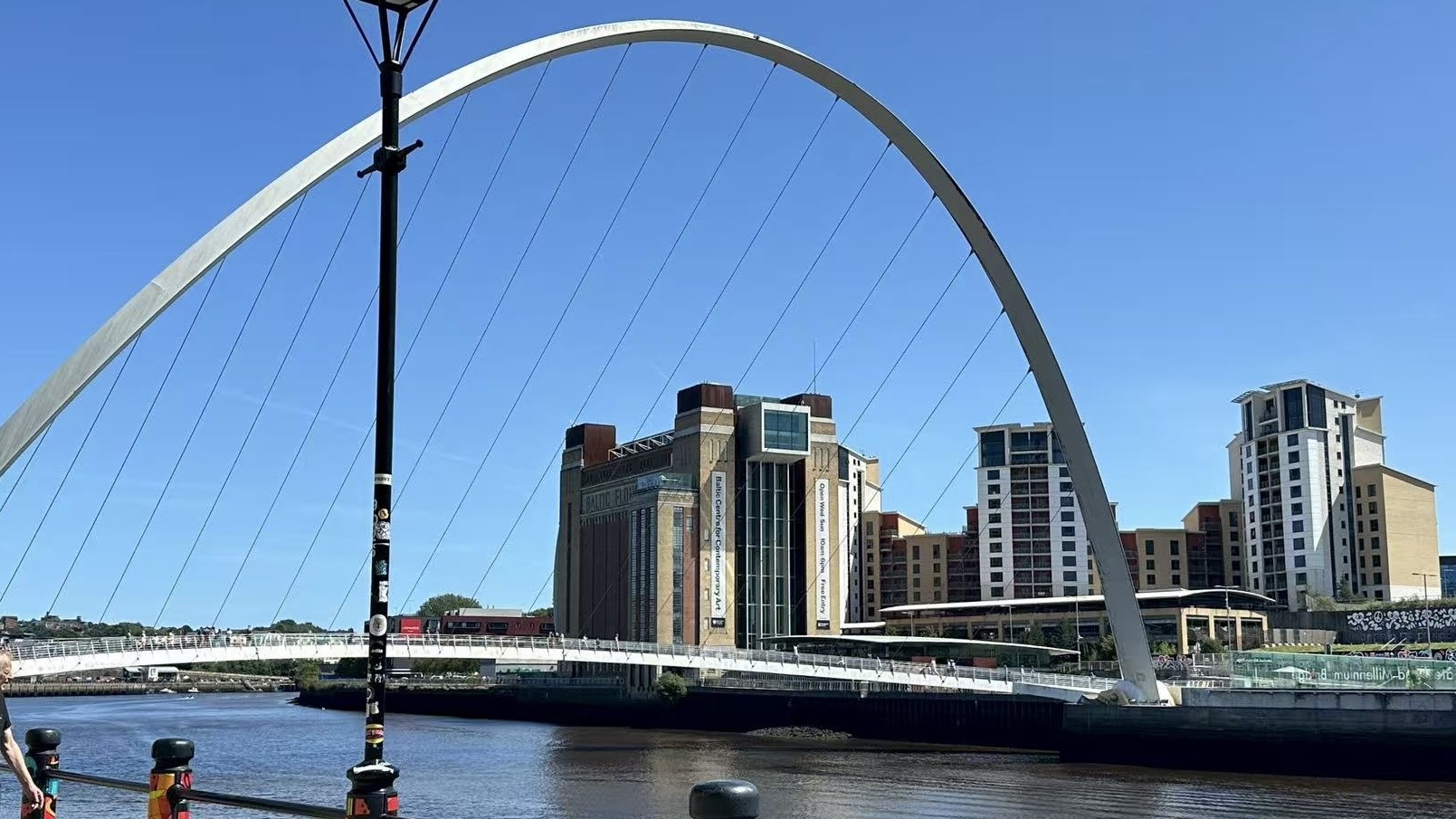
Today, offshore wind, low-carbon and renewable energy, and public service are rapidly emerging in Newcastle, as well as the Newcastle Helix Centre is attracting more science and technology companies. These new industries are not only the key drivers of the local economic revival but also create a large number of skilled job vacancies for local young people and graduates.
The reason for this situation is that the traditional industries declined and the economic climate slowed down in the North East — Newcastle came under severe pressure on economic transformation. To recover the economy, the government has begun a gradual shift in development focus to the energy and technology sectors.
In this article, I speak with Stuart Dawley, Chair Professor of Economic Geography at Newcastle University, Oran Willson, Policy and Economy Adviser at The North East Combined Authority, Jill Rhodes, Passenger Transport Section Manager at Nexus — a public transport company — to interpret how the industrial transformation in Newcastle is improving the standard of living of Newcastle residents and contributing to the sustainable development of the local community.
Transformation of the Old Industrial Base
The industrial structure of the economy in Newcastle is undergoing a kind of redevelopment of the old and the new — many of these activities provide greater opportunities for residents.
Newcastle played a significant role in the industrial age, and it is documented that as early as 1294, Newcastle was building a galley for the fleet of the King. Tyneside also pioneered the age of the steam turbine in 1884.
However, with the profound structural changes in the global economy, a large number of manufacturing factories in the North East have closed, and this has led to a spike in unemployment. Thus, Newcastle has experienced severe economic deactivation and social problems, with many families facing dilemmas of unemployment and life.
In order to address these difficulties, Newcastle began to actively seek a path of economic transformation. Stuart Dawley, Chair Professor of Economic Geography at Newcastle University, points out that Newcastle has gradually developed a large amount of advanced manufacturing by using its good geographic location and government policy support.

Source: Video still by Haowen Lu
“What we’ve seen in this region is a move away from a high dependence upon manufacturing, but manufacturing and maybe thinking about it as advanced manufacturing is still very important,” says Professor Dawley.
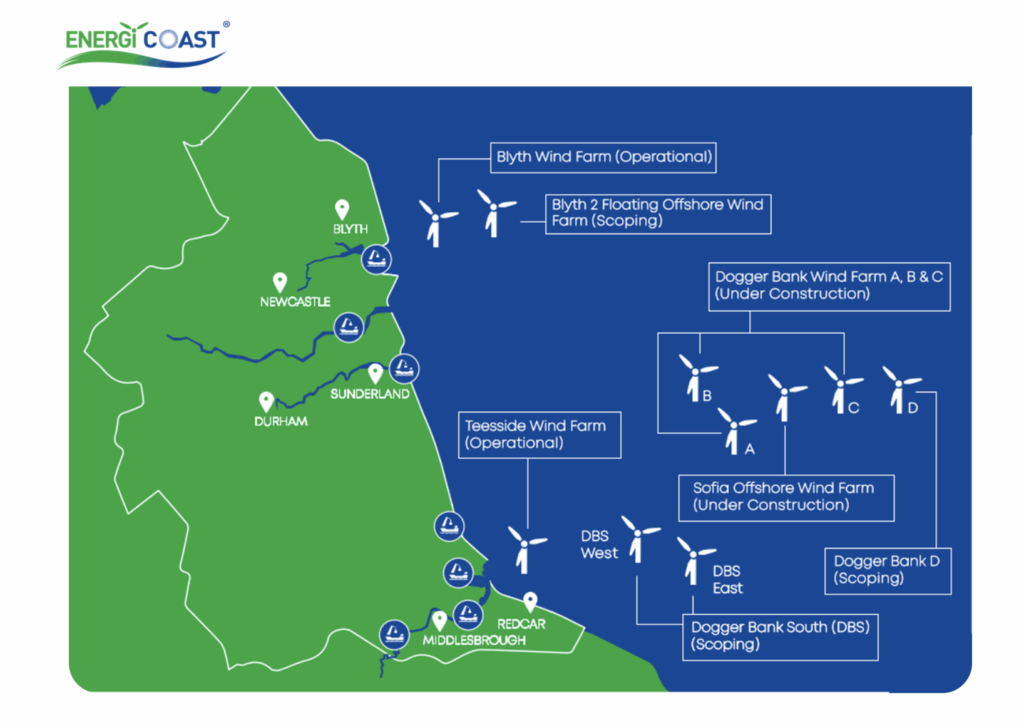
Specifically, the offshore wind industry, the power battery manufacturing industry and the automotive sector are the key sectors of the economic renaissance of Newcastle. Professor Dawley explains that the coast is where offshore wind gets its power, so that is one of the main advantages of developing offshore wind farms in Newcastle.

Credit: Yiyang Zhang (used with permission)
Professor Dawley says that the North East has a significant industrial heritage, such as the old industries of shipbuilding on the Tyne and the Wear, and the steelmaking on Teesside.
But, he adds, these industries disappeared twenty or thirty years ago and are now being redeveloped for new industries, many of which are relevant to the low-carbon energy and advanced manufacturing sectors. “So, the production of say hydrogen and carbon capture on Teesside, through to the use of the shipyards or the old shipyards on the Tyne for offshore wind. And if you go to Blyth, you’ve got the research and development for the blade testing in Blyth again — they’re using old infrastructure for new purposes,” Professor Dawley explains.
New Industries, New Opportunities, New Lives
Advanced Manufacturing and Offshore Wind
Source: Screenshot from the ENERGI COAST website
Oran Willson, Policy and Economy Adviser at The North East Combined Authority, says that more jobs will be generated in Newcastle over the next five years, the authorities have clearly identified offshore wind and advanced manufacturing as priority areas for development in the local growth plan. The authorities are committed to bringing in the suitable companies to invest, as a result, these companies can provide high-quality and well-paid jobs in Newcastle.
“I would say it’s probably something around five to ten thousand jobs at the moment. If managed carefully, to a better way of life for a lot of people in the northeast,” Oran adds.
Public Service
Professor Dawley emphasises: “At the same time, the region has transition, so there’s more of an emphasis upon the service sector.” Newcastle is a vibrant city that attracts people from all over the world to study and live, which has led to a boom in the public service sector, while at the same time, it has increased the number of jobs in Newcastle and contributed to the local economic growth.
Jill Rhodes, Passenger Transport Section Manager at Nexus, points out: “In Newcastle, I think we’ve probably created like two hundred, three hundred jobs.”
When talking about the contribution of emerging industries to the income of the residents, Jill smiles and says: “It’s probably made more stable and like a higher income than my last job. It’s just helped me to have a house to look after my children and to have a nice lifestyle in Newcastle.”
Advanced Technology

Source: Screenshot from the Newcastle Helix website
Professor Dawley adds: “There are other important industries around thinking about AI and digital and computing and things so on and so forth.”
He explains, Newcastle has a strong soft power — it has a growing international reputation. In addition, there has world-class universities that play an important role in developing a full range of high-tech talent. And Newcastle Helix Centre attracts a large number of technology companies, these companies not only push the upgrade of local industries, but also provide better job opportunities for Newcastle graduates and young people. This phenomenon stimulates the economic vitality of the local community.
Newcastle was once the heartland of British industry. It fueled the Industrial Revolution, with shipyards, steelworks and mines that once supported the economic lifeblood of the whole city, as well as made Britain the factory of the world. This deep industrial heritage has shaped a unique culture of workers and community spirit. But, now, the economic transformation in Newcastle means more opportunities for young people to train in new skills and the chance to stay in their home city to find good jobs.
This website is produced by journalism students. The views expressed on the site are not that of Newcastle University. They are the personal views of the student editors and contributors to this website. Seek professional advice for any health-related matter. Every effort is made to ensure that information contained on this website is accurate and up-to-date. However, information is subject to change and we can not accept liability for the accuracy of all the information presented at any given time. We do occasionally provide links from our website to information from third parties. We accept no responsibility for information obtained through such links.
I would like to express my sincere appreciation for it.
Newcastle used to be a major centre for shipping and industry, but now it is experiencing a resurgence in a different direction.