17 August 2023. BY Xueqi Peng
As Newcastle’s largest harbour – the Port of Tyne – is also one of the most active for fishermen, Key Master Thomas Glenny from North Shields tells us that thirty years ago, fishermen used to be a popular occupation in the area, with more than 70 boats moving through the harbour every day, whereas today it has plummeted to around 30.
During the outbreak blockade, many fishermen were unable to fish properly due to the supply chain breakdown, and the fish that was caught could not be sold at a good price, but over the last 18 months, prices have started to recover, especially for shrimp, which is more expensive than it was before the outbreak. Lawrence, a buyer who supplies seafood to a number of restaurants, said, “Seafood prices are up roughly 40 per cent on last year, with cod and prawns still being the best sellers.”
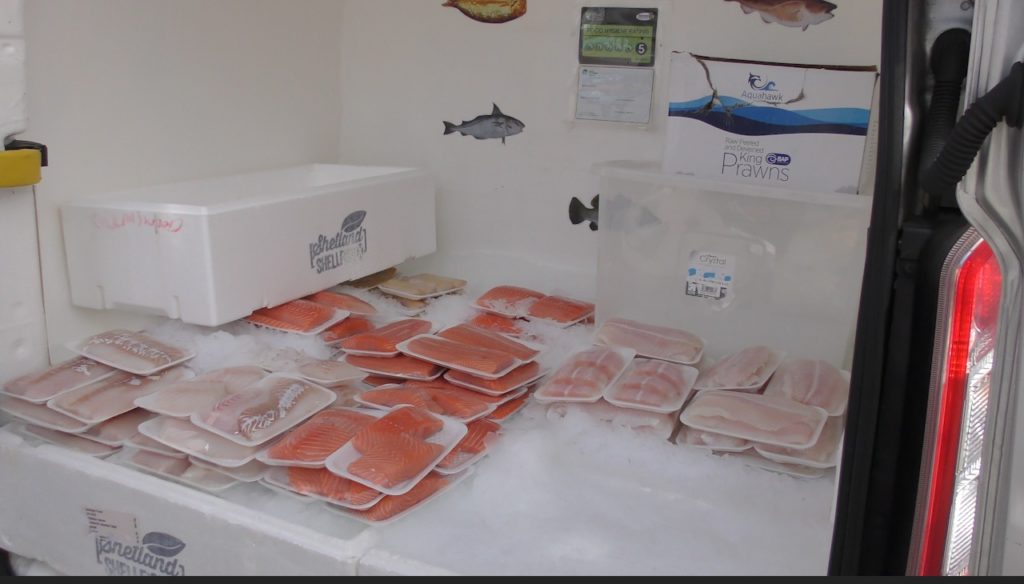
Photo credit: Xueqi Peng
The locally caught seafood is usually sold at the neighbourhood market at 7.30am on the same day for a bidding price, and is usually transported not only to local cafes and restaurants, but also to Spain, France, etc. The price is usually determined by the quality of the seafood. The price of the seafood is usually determined by the quality of the seafood, with different companies setting different prices, and the fishermen do not have direct access to the prices.
Despite the rise in seafood prices, Thomas is pessimistic that there won’t be any more young people willing to take up the profession unless his father owns a boat, as more young people now have a greater need for a degree to get a better-paying job. “The fishermen here go back generations. Their fathers will also be fishermen. So it’s like a tradition that goes on forever, and if you say I’m going to become a fisherman and jump on a boat, that’s a special way you have to be born that way. It’s not going to work.”
Captain John Rogers, from the same harbour, believes that the combination of insufficient government support for the local fishing industry, a wider range of occupations that are treated far better than fishermen, and high taxes, has led to a stagnation of the industry.
This website is part of a student project. While the information on this website has been verified to the best of our abilities, we cannot guarantee that there are no mistakes or errors.
The material on this site is given for general information only and does not constitute professional advice.
The views expressed through this site are those of the individual contributors and not those of the website owner. We are not responsible for the content of external sites.