

credit: Yin
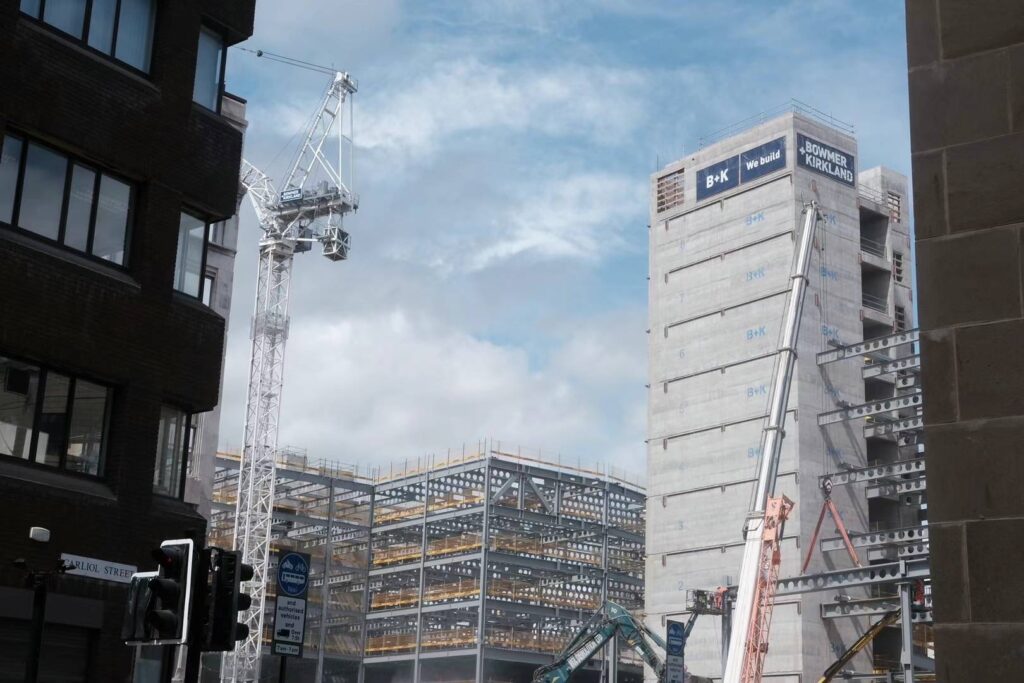
Lately, there’s been a construction boom in Newcastle’s city center, with construction sites and busy workers everywhere you look. But what really stands out is that almost all the workers are men. This gender imbalance highlights the ongoing issue of discrimination in the construction industry. And it’s not just a local problem—across the globe, women in construction and men in nursing are significantly underrepresented.

credit: Yin Zhu
A statistic report released on July 23, 2023 shows Women represent only 9.9% of the construction industry workforce.
credit: Yuxi Cheng
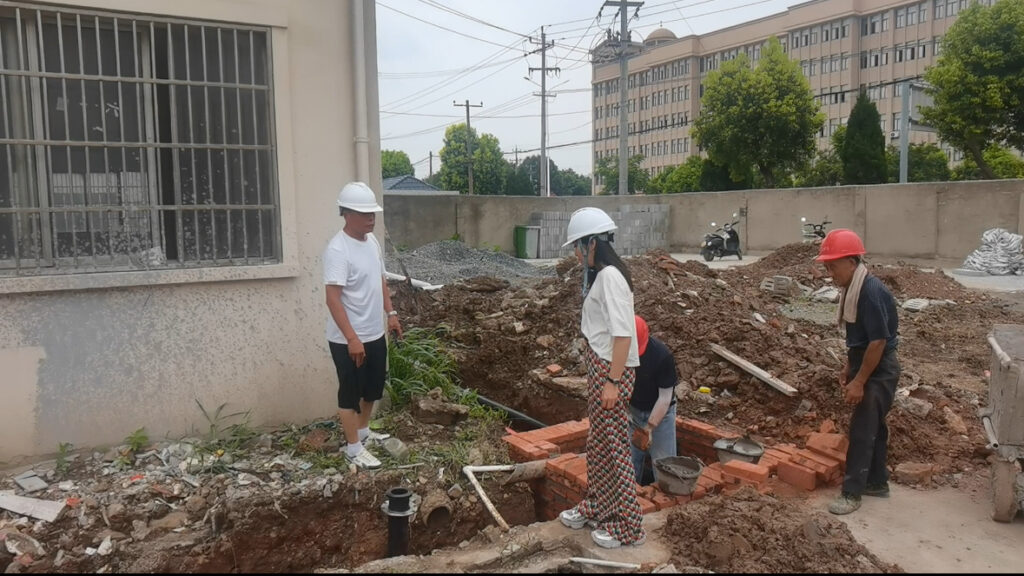
Yuxi Cheng, general manager of a construction company in China, is a woman who has been working in the construction industry for more than ten years.
“I think the biggest challenge is society has different expectations for women and men, most are think that women always doing in the service field…That is the most stressful, all in all, people think women are limited in their ability to do this kind of work, like are there any problems with project quality, construction period, and safety? In terms to overcome, firstly, I think is time, I need to spend more time than men, and the I should pay more attention to the project quality and management, improve the company’s brand and reputation, thereby gaining widespread support from society”
Yuxi Cheng
Yuxi Cheng’s journey is more than just her personal career story; it represents broader social challenges. Under her leadership, her company’s projects have received widespread acclaim for their quality and efficiency. Her success not only demonstrates the capabilities of women in the construction industry but also serves as an inspiration for more women to confidently pursue careers in this traditionally male-dominated field.
credit: Yin Zhu
However, Yuxi also pointed out that “gender bias cannot be eliminated overnight”. She believes that “in addition to personal efforts, the support of the industry and society is also indispensable. Only by promoting policy reforms, raising awareness of gender equality, and providing more career development opportunities for women can the status quo be truly changed”.
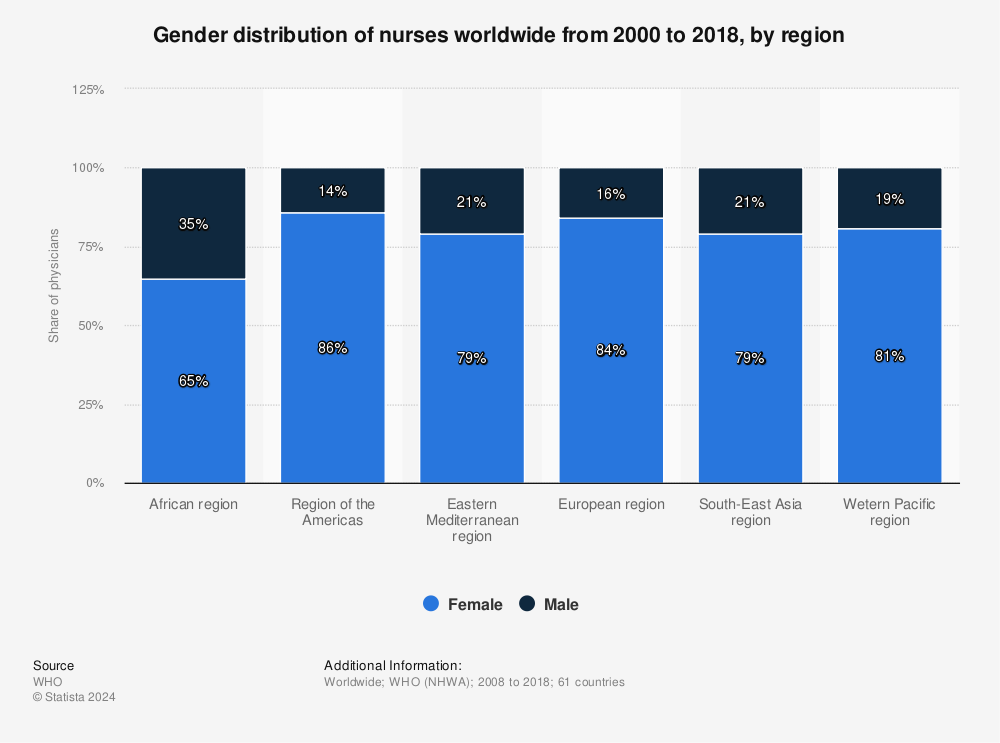
The other statistics report that we can see the percentage of male nurses always takes a small proportion in the world especially in American and European countries.
credit:Statista
Anthony Weke, a registered nurse in the UK, and also a lecturer in nursing at Newcastle University.
“My original dream was to be a doctor, and when I didn’t get accepted into medical school…I fell in love with the profession…I went on to do a Masters and PhD in Public Health and now work as a lecturer and nurse…So a chaperone is someone who goes to witness a procedure, like I would call, go with a female colleague, or like a female paramedic, accompany me, and maybe be accused of harassment.”
Anthony Weke
Despite these challenges, Anthony Weke remained steadfast in his nursing career and became a leader in the industry through continuous learning and advancement.
Anthony believes “nursing is not just a profession for women, it is a profession that requires compassion, technology and dedication, regardless of gender, everyone can find their own value in this field”.
credit: Indeed,
Yuxi Cheng and Anthony Weke’s stories show that gender biases are still a challenge in non-traditional fields, but things are improving with better awareness and policies. Embracing diversity makes everyone stronger, and the aim is for all jobs to be valued for what they are, not by who does them.