

^ Image credit: CDD20, Pixabay, CC0 1.0
As of 2024, I’m officially putting my foot down on tracking my carbon footprint.
Now, that probably seems like a pretty ironic thing to read on an environmental blog. But, the idea of having a ‘carbon footprint’, or achieving carbon neutrality, doesn’t have the green beginnings you’d assume.
Like me, you probably first heard of a carbon footprint in school, or on one of the many apps which now features a carbon calculator. The term is defined by The Nature Conservancy as “the total amount of greenhouse gases (including carbon dioxide and methane) that are generated by our actions,” and is the most popular method of measuring our climate impact. It’s something that I was pretty concerned about for around a decade.
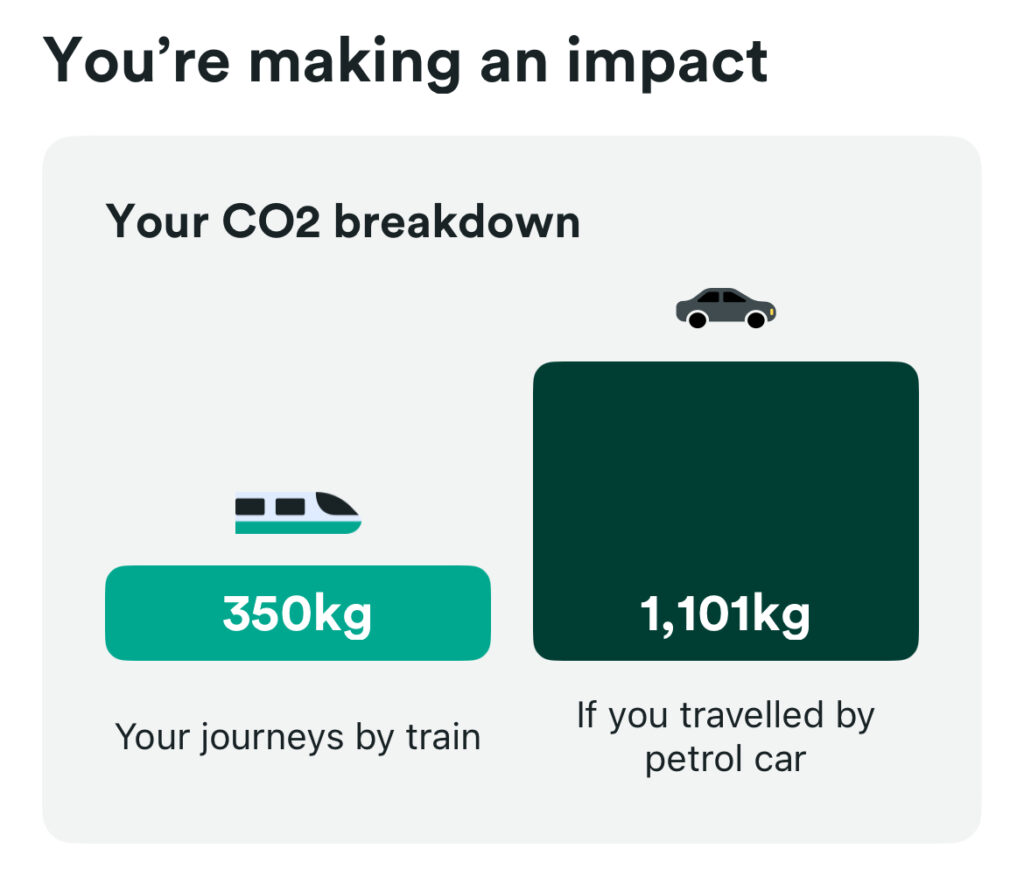
Image credit: Keira Gratton
I seriously considered not pursuing my driver’s license, and going to University in my hometown, all over concerns that I would be travelling too much. The knowledge of how much my carbon emissions were contributing to global warming haunted me every time I went on holiday abroad, drove to a friend’s house, or even used ChatGPT.
But in the end, I did get that car I wanted, I’m currently saving for a girls’ holiday this summer, and I’m using ChatGPT to generate this article. Ok, that last bit was a joke, but I am serious about having changed my mindset around carbon footprints.
Whilst the idea of a carbon footprint was coined in the 1992 works on William Rees, the term was popularised by the 2003 British Petroleum Ad campaign, Beyond Petroleum. The rebrand was devised by public relations and marketing agency Ogilvy and Mather, and urged people to reduce their individual carbon emissions.
Uploaded to YouTube by @mpdrsn without copyright.




The advertisement preys on the lack of climate education in the early 2000s, satirizing interviewees who have never considered their own climate impact. The slogan, “we can all do more to emit less”, heavily implies that individuals need to take accountability for their pollution, inspiring a certain guilt in the viewer.
BP have over 18,700 gas stations worldwide and is the second-largest non-state oil company in the world, producing 31 million tonnes of emissions in 2023. So why is a crude oil company trying to convince us, their customers, to get greener?
The answer lies in the rhetoric. This advertisement, and the following campaigns of other big polluters (e.g. Chevron’s Will You Join Us? climate initiative), shift the burden of carbon neutrality onto individual consumers, dodging corporate responsibility. The complicit guilt people feel silences vast swathes of would-be activists, who feel hypocritical criticising companies that they still use. The idea of the carbon footprint was originally devised as a greenwashing technique to distract individuals from a company’s pollution with their own personal climate shame as a consumer.
Despite their underlying motives however, BP were somewhat right. Consumer usage makes up 90% of a company’s greenhouse gas emissions, with roughly only 10% stemming directly from manufacturing.
And yet, maybe you shouldn’t blame yourself so much for having a carbon footprint. In order to finally let myself start living, I had to do exactly that – forgive some of my pollution. The reality is, especially in the UK, since the industrial boom of the late 1800s, our oil-guzzling, coal-burning economy hasn’t looked back. We’ve relied on polluting industries and trades for so long that society is intrinsically built around them. You need a car to get to work on time, as public transport is underfunded and unreliable. You need to burn fossil fuels to keep your house warm, as most homes come with built-in oil and gas boilers. Many of that 90% will be using fossil fuels out of necessity, not choice.
Fossil fuel companies also spend billions on advertising each year, which the New Weather Institute’s Dirty Money report describes as buying a “‘social licence’ to operate, in an attempt to divert attention from their role in fuelling the climate crisis”. The Tottenham Hotspurs have been accepting sponsorship from INEOS, one of the world’s largest petrochemical companies for over three years. The normalisation of these fossil giants for consumers is a clear-cut attempt to keep our planet bleeding crude oil.

Image credit: Supporterhéninois, Wikimedia Commons, CC0 1.0
So then, now that I’ve understood how corporations can influence us to continue polluting, does that mean I’m entirely off the hook? Short answer – no. I know that I claimed to have stopped caring about my carbon footprint, but that’s really only a half-truth. What I meant was, I stopped believing that it was solely my responsibility to end the climate crisis. Truly, for everything I do as an individual, I will never be able to save the planet. And selfishly, I felt relief in realising that.
In truth, the climate burden is shared, but some carry it heavier than others. The Carbon Majors Report claims that 70% of the world’s emissions since 1988 have come from just 100 companies. Furthermore, “New Oxfam research finds that the richest among us were responsible for more carbon emissions than 5 billion people”, with the jet-setting and big oil investments of “carbon-billionaires’” set to cause 1.3 billion heart-related deaths this decade. We should all be trying to reduce emissions where we can, but you probably shouldn’t be losing sleep over it whilst Taylor Swift takes her 90th private flight this year.
In the end, your carbon footprint doesn’t measure your dedication to reducing global warming, only your ability to enact those desires in an unfair world. You end up having to be realistic about how you as an individual should limit yourself, considering the extreme (and expensive) lengths you’d have to go to to avoid, say, mainstream energy or animal products.
You deserve to live as deliciously as Florence Given, making climate-conscious choices that also keep you happy. I religiously shop at charity shops, but I also refuse to stop road-tripping to see my best friend. She doesn’t live near a train station, and that’s neither of our faults. Collective climate action is just as important as individual habits, so you’re better off challenging the system where you can, and forgiving yourself where you simply can’t (won’t). We can’t all be selfless automatons, and I hope that by admitting I’m not one, I can convince you that any little changes you make are still worth it! If we can all try that, our joint commitments might yet smooth out the wrinkles.
I’ve stopped losing sleep over my carbon footprint, but I’ve never stopped caring about climate change. As the new generation, we need to find a comfortable balance between crippling climate anxiety and sustainable living. Ultimately, we didn’t ask to be born onto a planet that had set itself on fire. Make green choices where you can, but don’t let your Trainline carbon calculator keep you up when you have assignments due…
I love love love this article. I too have been finding it really difficult to cope with the guilt of my carbon footprint whilst also knowing that I simply have to drive to work to make it on time or to pick up my siblings. But you make such a good point about major corporations and celebrities contributing so much more than we do.
Such an interesting take which isn’t often discussed – really well worded and a very informative read!