The current cost of living crisis in the UK has made spending on everyday items such as food, gas and petrol incredibly limited for many households. For some people, this has meant relying on resources such as food banks, soup kitchens and other organisations to provide food for themselves and their families.
Food banks and similar support systems
There are currently over 2000 food banks available in the UK alone, operating both independently and with The Trussell Trust. Sadly, the demand for these organisations increase annually.
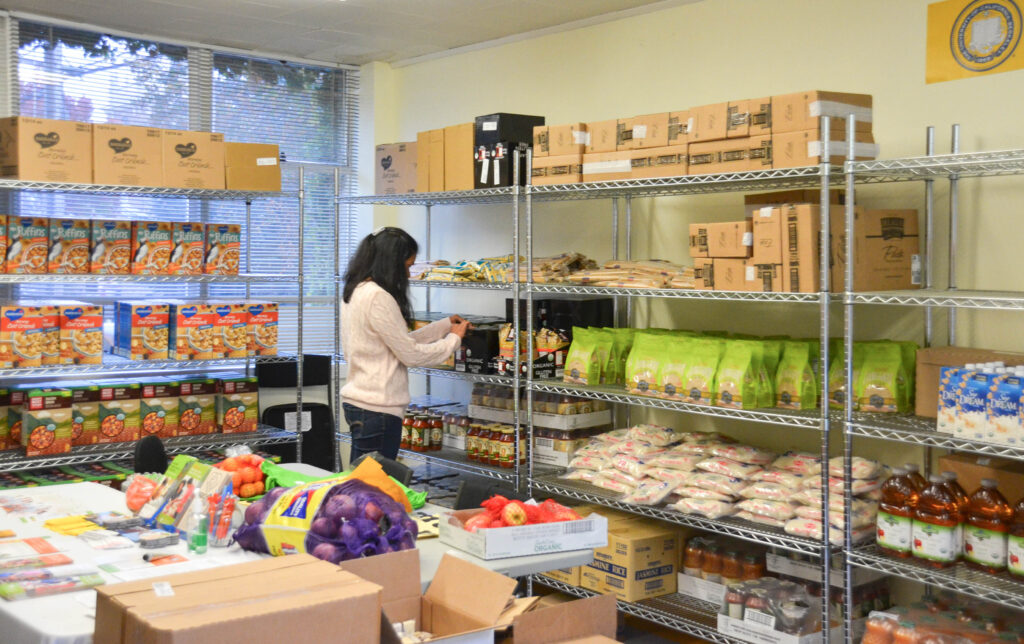
The latest report of independent food banks found that 89% of the organisations had seen an increase in demand from December 2021/January 2022 to December 2022/January 2023.
This is a staggering yet not overly surprising amount with more and more people being in need of financial help. Statistics also found that approximately 2.99million people used a foodbank in the UK between 2022/23 which is a significant increase from the 2021/22 financial year.
People of the North East are disproportionately disadvantaged when it comes to food insecurity with 10% of households in the area being deemed as ‘food insecure’ in 2022.
This is the highest amount for any region within England.
| English Region | % of Households that were food insecure |
| North East | 10 |
| West Midlands | 9 |
| North West | 8 |
| Yorkshire and the Humber | 6 |
| East Midlands | 6 |
| South East | 6 |
| East | 5 |
| London | 5 |
| South West | 5 |
Despite governmental help via the cost of living payment in Spring 2023, Trussell Trust Statistics found that 73% who received the payment felt that it either didn’t improve their current financial situation or did so only a little bit.
Credit: @boxall_cad7366 on X
I interviewed Aaron Carr, a medical engineering technician apprentice working through an NHS programme, on his thoughts on how his income has changed in line with higher living costs.
Interview with Aaron Carr, an apprentice with a company through the NHS.
Video credit: Cadence Boxall
For those dealing with financial hardships, The Trussell Trust offer ‘three-day emergency food parcels’ for those in need and the organisation have seen a 37% increase in the demand for these between 31st March 2022 and 1st April 2023.
For those in the North East, there are also organisations such as ‘The Peoples Kitchen‘ in Newcastle that provide hot meals along with everyday living items to those in need every day. The organisation also offer health support along with drug and alcohol advice to help support the futures of those struggling.
Video credit: @lumotravel
Impact on students
The cost of living crisis has also affected students’ finances more than ever before as ONS found over three-quarters of students are “concerned” that the rise in living costs may affect their performance at university.
I created a qualitative survey, completed by 40 students, on their experiences with the cost of living crisis and how this has affected them. The results found that 80% of the students agree they are concerned that the rise in living costs may affect their performance at university.
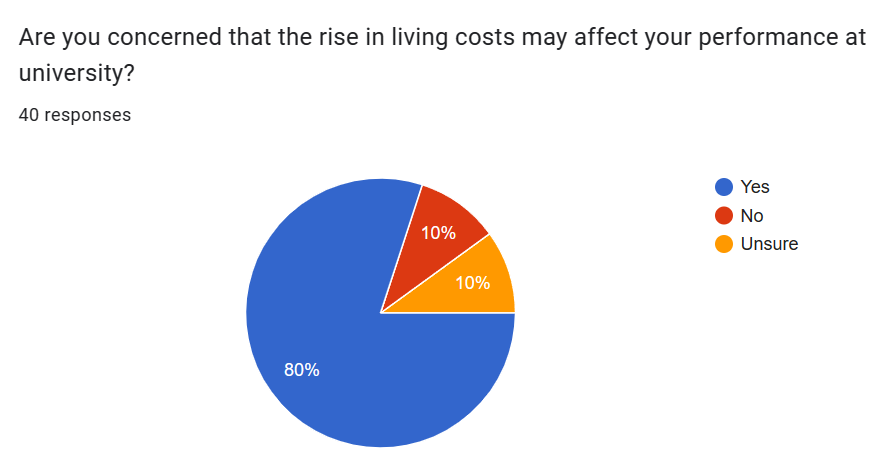
Pie chart from a survey given to students about their experiences with the cost of living crisis.
Credit: Cadence Boxall
The survey also found that 95% of students had experienced an increase in living costs during their time at university. This aligns with the recent ONS statistic that more than 9/10 higher education students found their cost of living increased compared with the last year.
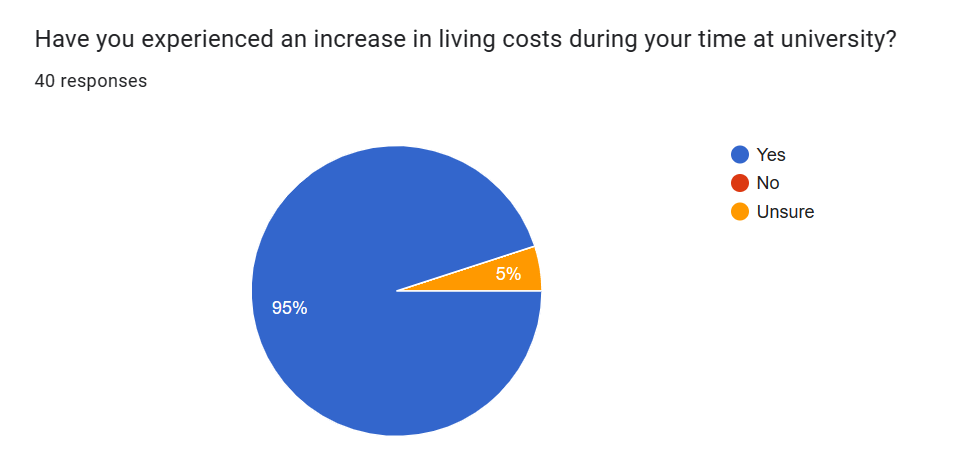
Pie chart from a survey given to students about their experiences with the cost of living crisis.
Credit: Cadence Boxall
I interviewed Sarah Rose Boxall, 21, who is a third year Theatre and Performance student at Northumbria University that has experienced and is aware of the financial struggles of student life since the start of the pandemic.
Video credit: Cadence Boxall
One of the many reasons for students struggling more this past financial year is likely due to their maintenance loan not being accurately in line with the rate of inflation, leaving students at a loss.
The Institute for Fiscal Studies (IFS) found that the annual increase in the maintenance loan for the 2022/23 academic year was based on the forecast inflation of 2.3% however inflation, based on CPI, was actually 11.1%. This meant that those from the poorest families would have suffered from this loss significantly more, with estimates that the poorest students in England were £1000 worse off than the 2020/21 academic year.
Other stats and facts
For many of us in the UK, saving money is a luxury with far too many living paycheck to paycheck. A 2018 ‘Financial Capability Survey‘ found that 39% of adults in the UK don’t feel confident managing their money and 11.5million people in the UK have less than £100 in savings.
Credit: Financial Capability
This does not differ when it comes to students dealing with student finances as ONS found there are 68% of students receiving student loans and 58% of these students said it did not cover their living costs. 25% said it covered the costs but only just.
This shows that the struggles with finances is unlikely due to a lack of budgeting or mindfulness but more to do with a lack of finances available.
We know the North East are struggling. There are a multitude of stats and facts that show too many people in the North need help.
Luckily, there are resources widely available due to organisations such as The Peoples Kitchen, The Trussell Trust and independent food banks who would all appreciate your donations. Citizens advice also offer guidance to those struggling who don’t know where to look for help.