University of Cambridge academic Dr Benjamin Hawkins has warned against the possible health risks associated with Trump’s trade tariffs.
After his work with Dr Courtney McNamara of Newcastle University, Hawkins reported that the tariffs could lead to more expensive products, which could in turn affect people’s health, not only in the US but the rest of the world also.
Whilst new developments have been made in the US-UK pharmaceutical partnership, which sees the UK have a 0% tariff on pharmaceutical exports to the US, Hawkins said other factors could still affect health in the UK and US.
Increased prices can make food more expensive, reducing consumers’ access to the products, as well as impacting the quality of food the consumer is able to buy. The trade tariffs can also cause general economic anxieties which can have negative impacts on consumer’s mental health.
Hawkins said that it is currently “really hard to tell” what the exact health implications of the tariffs could be because of the tariff’s unpredictable nature.
Their unpredictability thus far and looking into the future means that it is very difficult to identify the “specific effects of individual tariffs on different commodity classes or different products.”
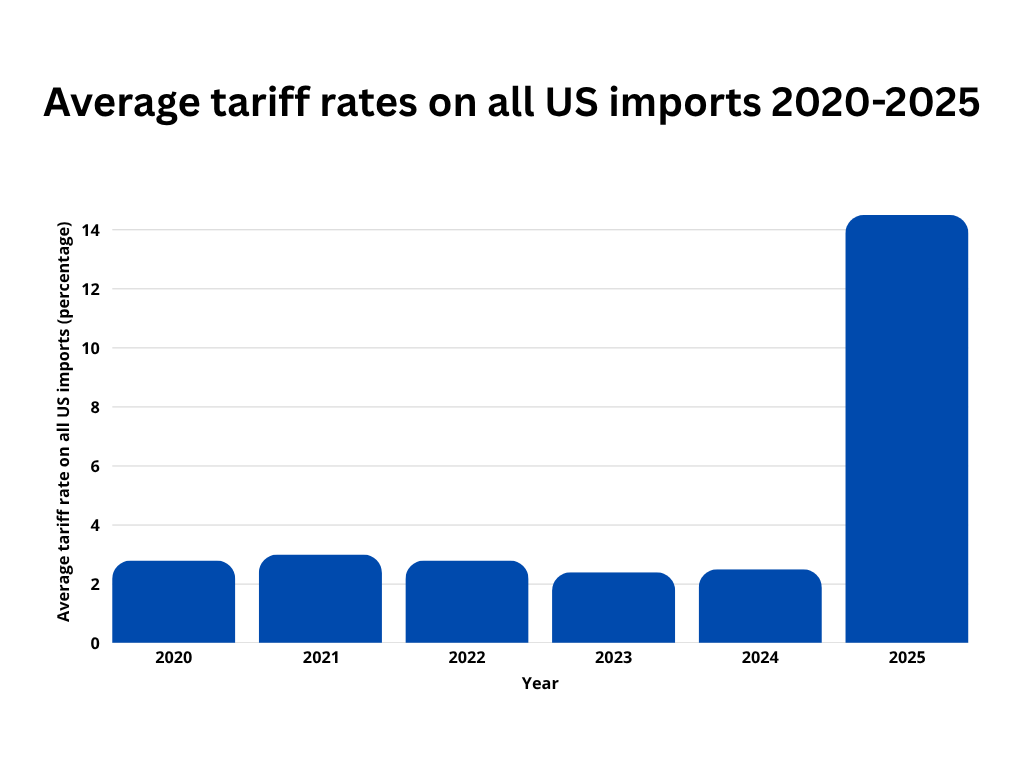
While there isn’t an exact figure on how much more expensive food alone will be, The Budget Lab is predicting an increase of 0.6% in consumer prices in the US in the short run, which equates to about $800 per household.
It’s not just the US that is affected, however.
Hawkins said that tariffs are reciprocal, with countries that have tariffs imposed on them often responding in kind, as the EU have done with alcohol imports, for example.
Other economics academics have made similar warnings.
Matthew Allen, lecturer at the University of Salford, said that when tariffs are applied globally, and reciprocal tariffs are applied in turn, they can cause increases in prices around the world.
With the reciprocal nature of tariffs, Allen said that “the general cost of living is just going to keep rising”.
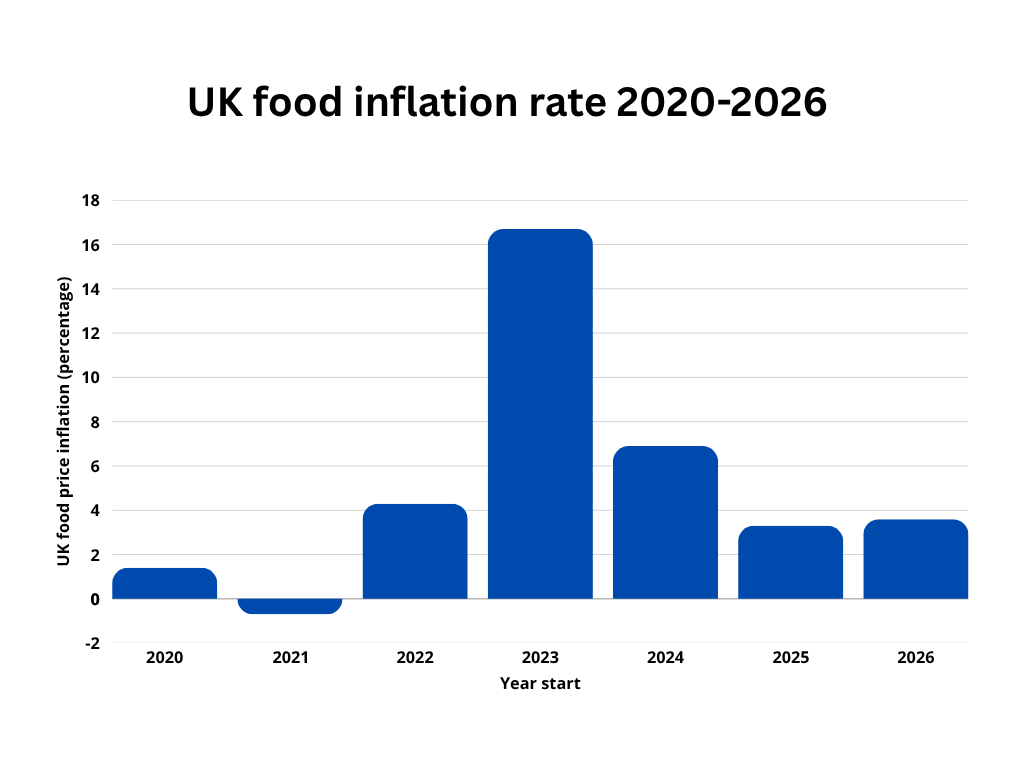
This could include the price of food, meaning UK consumers could also see an increase in their grocery bills like the US. This comes after a 3.6% rise in the price of food and non-alcoholic beverages from January 2025 to 2026.
Hawkins said that when prices increase globally, trade decreases which then negatively affects a country’s economy. This can then negatively affect consumer health, both in an inability to afford certain products and anxieties surrounding finances.
Hawkins said that “trade has enormous implications for health”, so much so that “health policy is trade policy and trade policy is health policy.”
He said that governments should take a much more holistic approach to trade policy, considering not just the economic impacts of policy but the health impacts also.
Going forward however, both Hawkins and Allen did not appear hopeful.
Allen said that the tariffs are “just going to go backwards and forwards in my view”, while Hawkins said that “it’s incredibly difficult for health actors to get a hearing”, and in these negotiations where “the ground is constantly moving” it is difficult to get involved in the conversation.