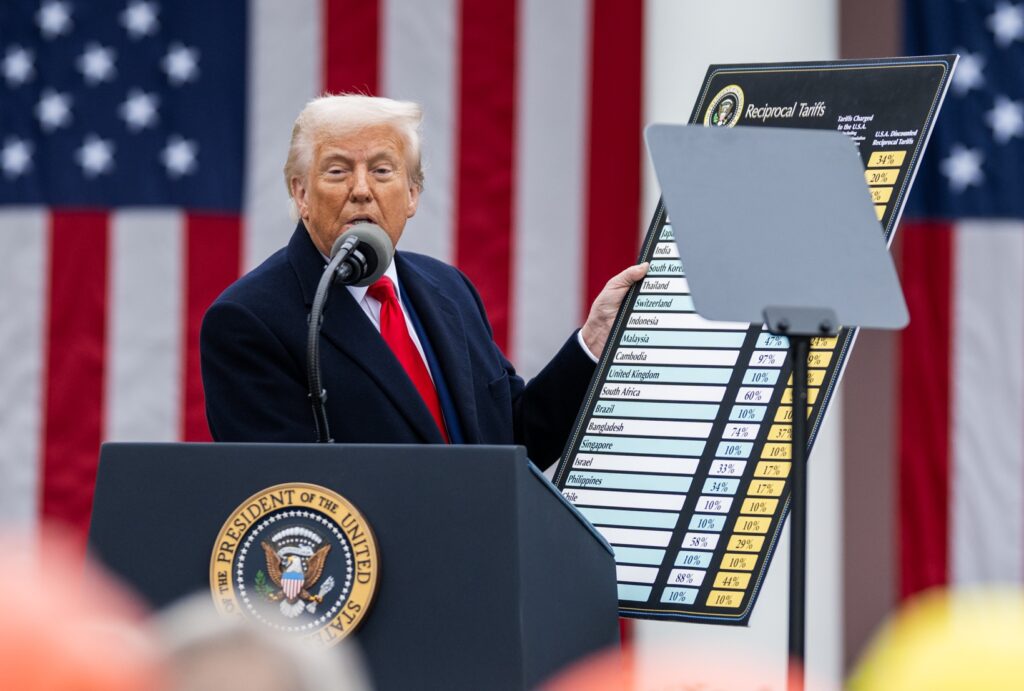
Trade tariffs are a tax which a government imposes on goods and services they import from other countries.
While tariffs have existed for hundreds of years, the USA applied a fresh set of tariffs last April, which essentially means that they are now paying more to import goods into their country than previously.
Lecturer in Economics at the University of Salford, Matthew Allen, and Senior Economist at Institute for Government Dan Haile, shared some insights into the workings of trade tariffs and the implications of Trump’s recent tariffs.
How does this affect the UK?
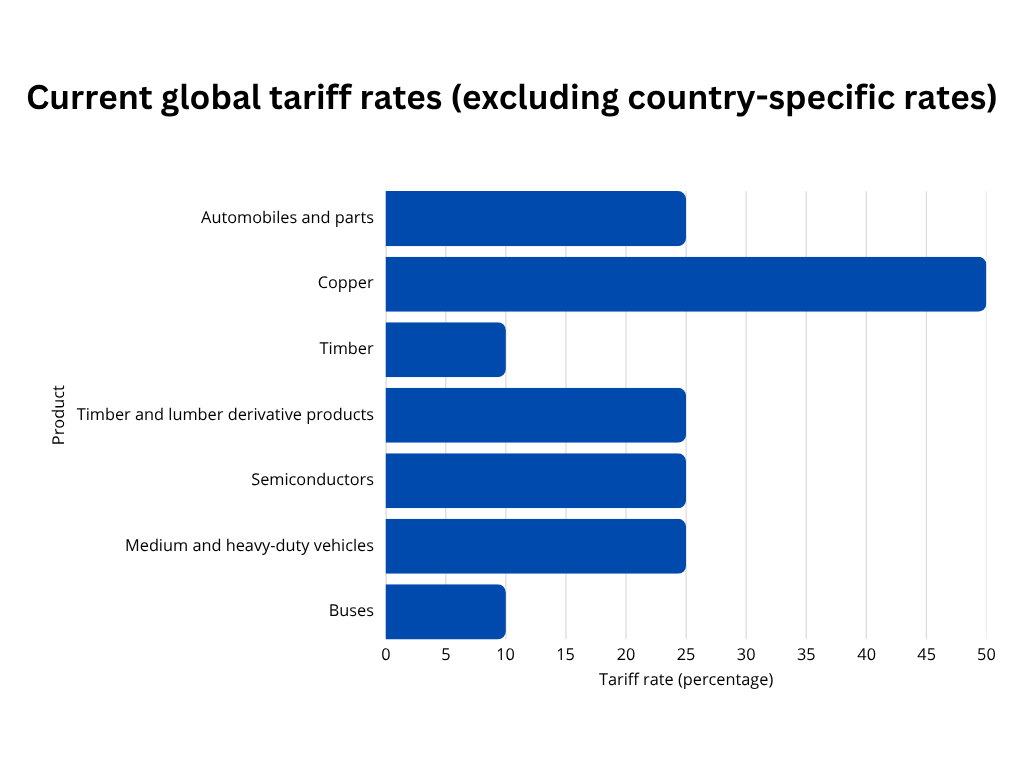
There is a baseline 10% tariff on goods globally, including in the UK.
There are also additional tariffs on automotives, steel and aluminium, and agriculture globally, to name a few. However, in the UK a US-UK economic prosperity deal was reached in May of last year which changes these slightly for us.
The deal means that the 25% tariff originally applied to steel and aluminium exports has been removed. The 25% tariff on automobiles has also been reduced to 10%, however this is applied only on up to 100,000 automobiles.
The UK is however, still affected by a 50% copper tariff and a 10% timber tariff, applied globally.
Why do countries apply tariffs?
Tariffs are designed to protect a country’s economic environment by encouraging people to buy local products made in their country, said Allen.
Haile said that the theory behind this is that it protects the local economy in the US by encouraging companies to “do their manufacturing in the US”, rather than “somewhere else where maybe the labour is cheaper”, like China for example.
By manufacturing locally, the economy is supported, and jobs are created for locals.
What does this mean for the UK?
Basically, products could get more expensive for us while we make less money.
Because tariffs are now applied to UK products, they are more expensive on the foreign market. UK exporters may have to decrease the price of their goods to compete with the cheaper prices charged in the US, which can lead to a reduction in profits.
Although, Haile said that thus far we haven’t seen “enormous impacts” of this in the UK economy, with the concern mainly being directed towards an increased cost of goods in the US.
However, Allen said that tariffs can impact countries, even if they are not the ones who have had it applied to them.
He said that because goods are often made from components from around the world, and each country has different tariff rates imposed on them, it is therefore more expensive to make the good, leading to an increased price for consumers.
The price of a good will vary based on the route it has taken around the world, where its components have come from, and what the tariff rate is for that component in that country.
However, it’s difficult to predict exactly how much more expensive goods could be, since the tariff rates are subject to change and the price of a good may vary depending on the “route” it has taken around the world.
There is also the case of reciprocal tariffs. This is when one country applies a tariff to another and the other country reacts in the same way, applying tariffs in retaliation.
This can lead to a back and forth, or a ‘tariff war’, with the first country imposing another tariff once more.
Because of this back and forth, “you’re starting to get a buildup of tariffs” and in turn “consumers like ourselves in the UK… are suffering”, said Allen.
Is there an end in sight for these tariff wars?
Haile said that the situation “is just really unpredictable”, while Allen said that “this is just going to go backwards and forwards in my view.”
If the US imposes a tariff on a country, “then all that country is going to do is react with another tariff”, said Allen.
There are also a number of social factors that will affect consumers when it comes to looking ahead at these tariffs.
The war in the Middle East, the cost-of-living crisis and the current post-Brexit era were all cited as concerns by Allen when it comes to the issue of tariffs.
Because of Brexit we “don’t have free trade with the EU” meaning that it’s already more expensive to import goods from there.
Because of Trump’s tariffs, it could now also cost the UK more to import other goods globally.
The increased cost of importing goods globally is a huge hit to the cost of living in the UK.
When it comes to the conflict in the middle east, Allen said that he found it very concerning. He said that “we don’t really know what the impact of that’s going to be, although we know that the prices are going to increase.”