From a handful of people in the 1950s to hundreds in a civic square. The Indian flag went up at Newcastle Civic Centre on 15 August. This is the community behind it.
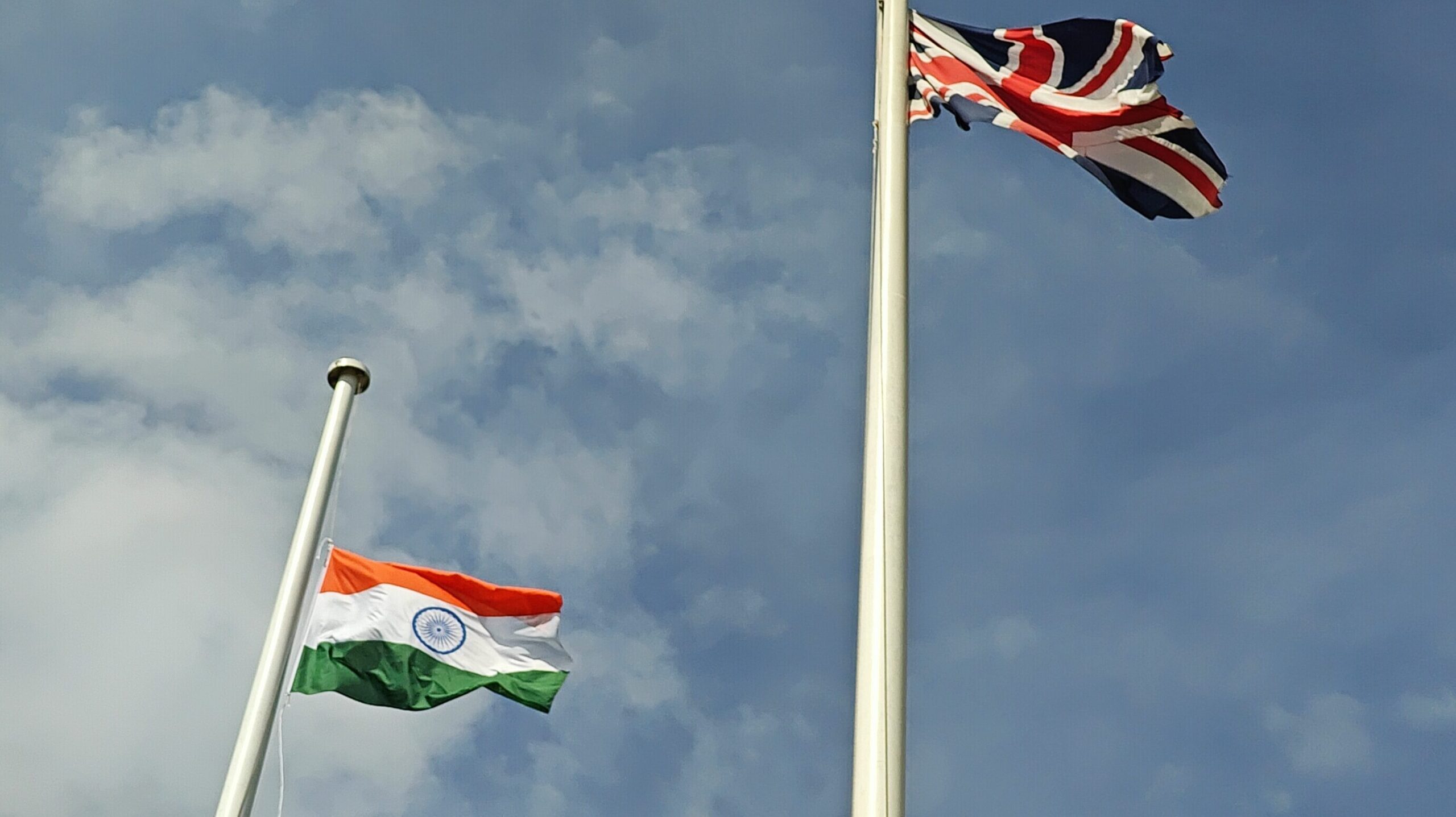
At twelve o’clock on 15 August, the Indian flag went up outside Newcastle Civic Centre. There were drums, an anthem, and hundreds of people standing in a square three and a half thousand miles from Mumbai.
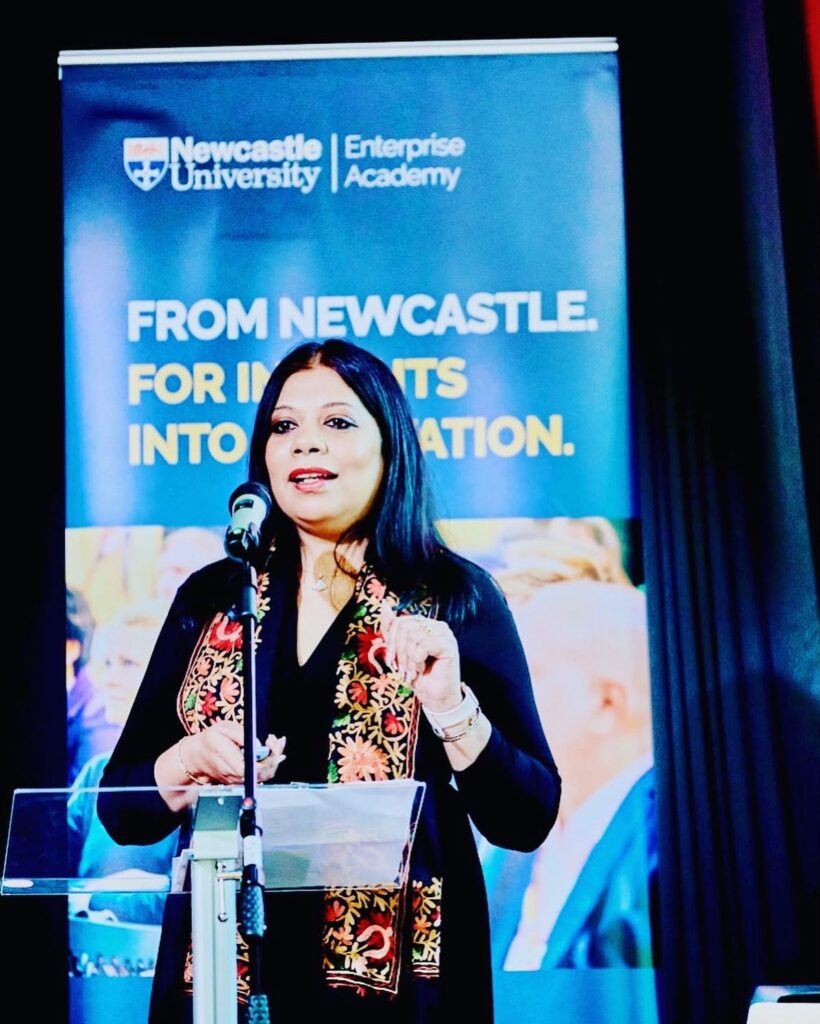
Speeches came from Meenu Malhotra, Honorary Consul General of India, and Professor Jane Robinson, Pro-Vice-Chancellor at Newcastle University. Cultural performances followed, and some of those who spoke answered in Marathi and Hindi. The turnout was covered by ChronicleLive.
At the 2021 census, more than 7,300 people in Newcastle identified as Indian or British Indian, part of an Asian population in the city of over 34,000.
But a flag goes up once a year. The community behind it is here on the other 364 days, so that is where this story went next.
Seventy years, one building
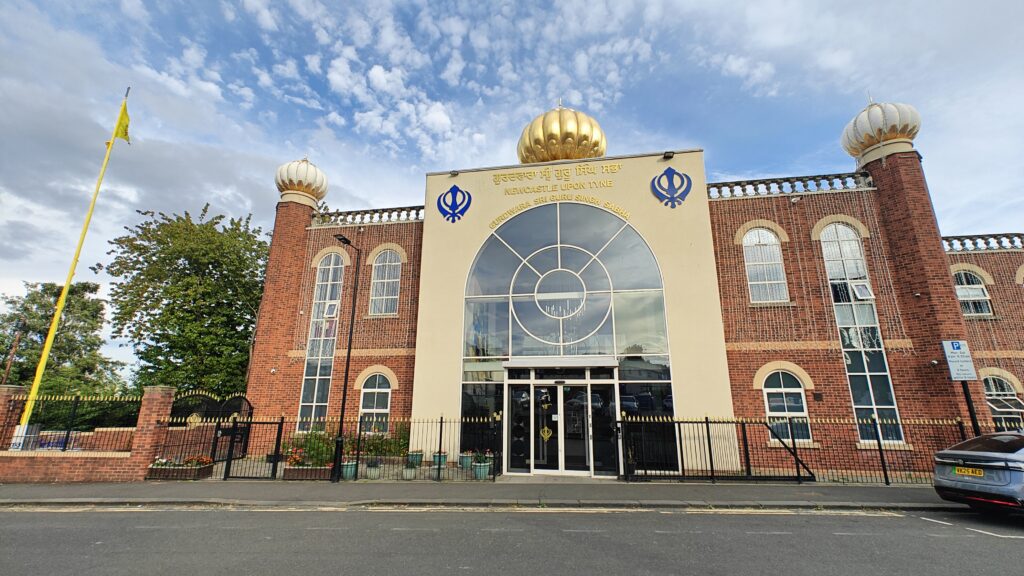
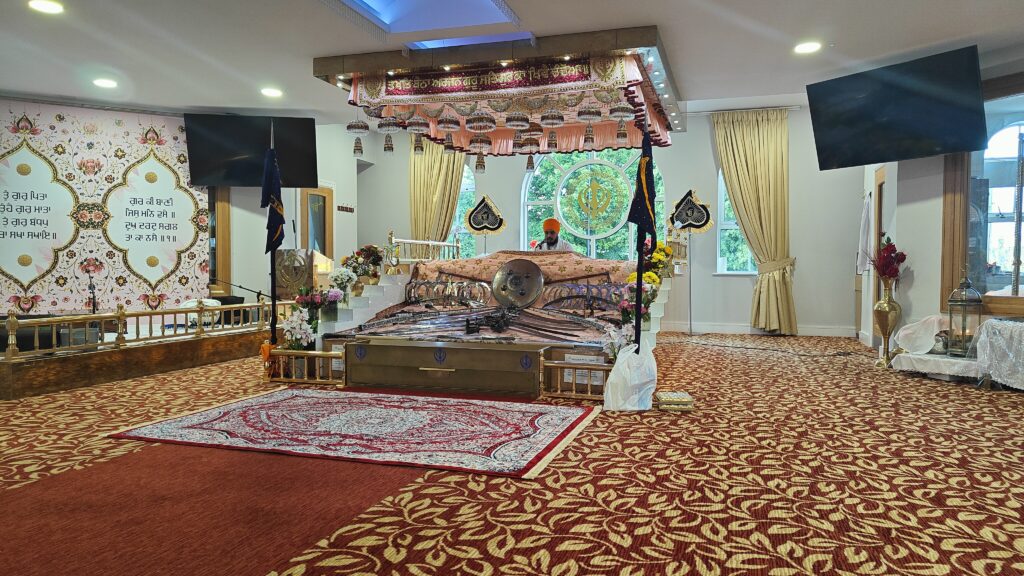
The answer sits in the west end of the city, at the Gurdwara Siri Guru Singh Sabha, where the doors stay open and the langar kitchen feeds whoever walks in.
Jaswinder Singh has watched most of it happen. His parents came from India to Slough in 1978 and moved north to Newcastle in 1984. He was born here, into a community that in the mid-1950s, by his account, amounted to only a handful of people.
“A lot of them were more door-to-door sales people selling clothes and things like that, trying to make a living,” he says. From doorsteps they moved to market stalls, travelling between towns, and some of them stayed.
The building followed the people. The first gurdwara was set up in a house in the 1970s. The older building, across the road from where he now stands, opened in 1976. The current one was completed in 2013.
“Generally, the north of England is very hospitable, very kind, very open-hearted. That’s the energy of the people around here.”
Jaswinder Singh, Sevadar, Gurdwara Siri Guru Singh Sabha
Today it works as something wider than a place of worship. Students arrive from Newcastle, Northumbria, Sunderland, South Shields and Teesside, and the langar kitchen serves anyone who comes through the door, which matters when the cost of student living is what it is.
“It’s like a home calling within the UK,” he says. And on who gets fed: “We honour everybody that walks through these doors.”
A table for twelve
Sharmishta Chatterjee-Banerjee has now lived in Britain longer than she lived in India.
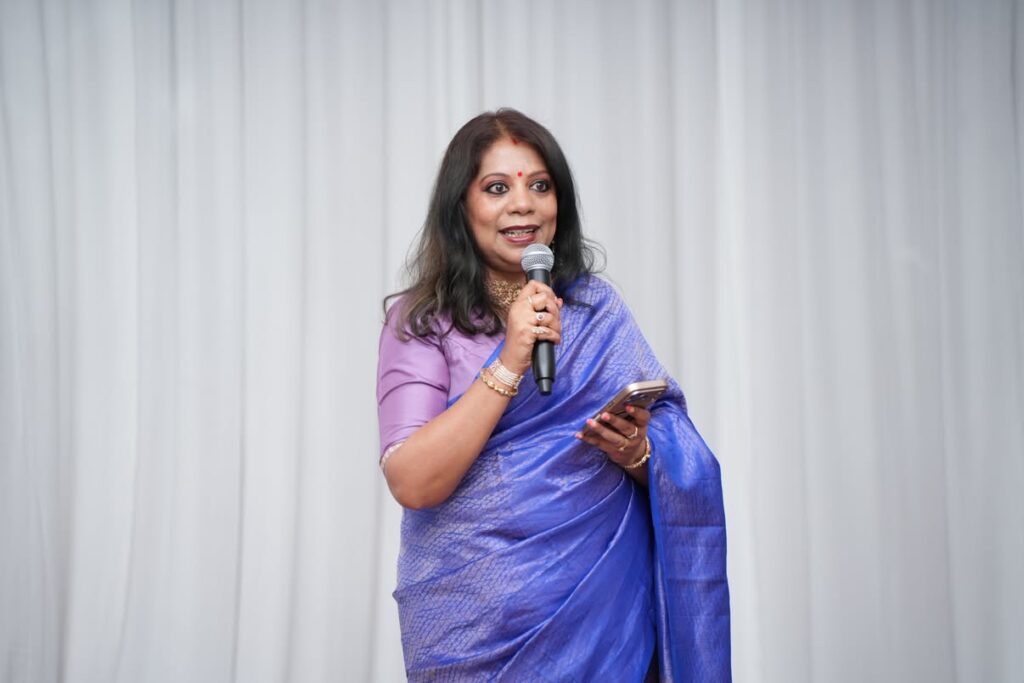
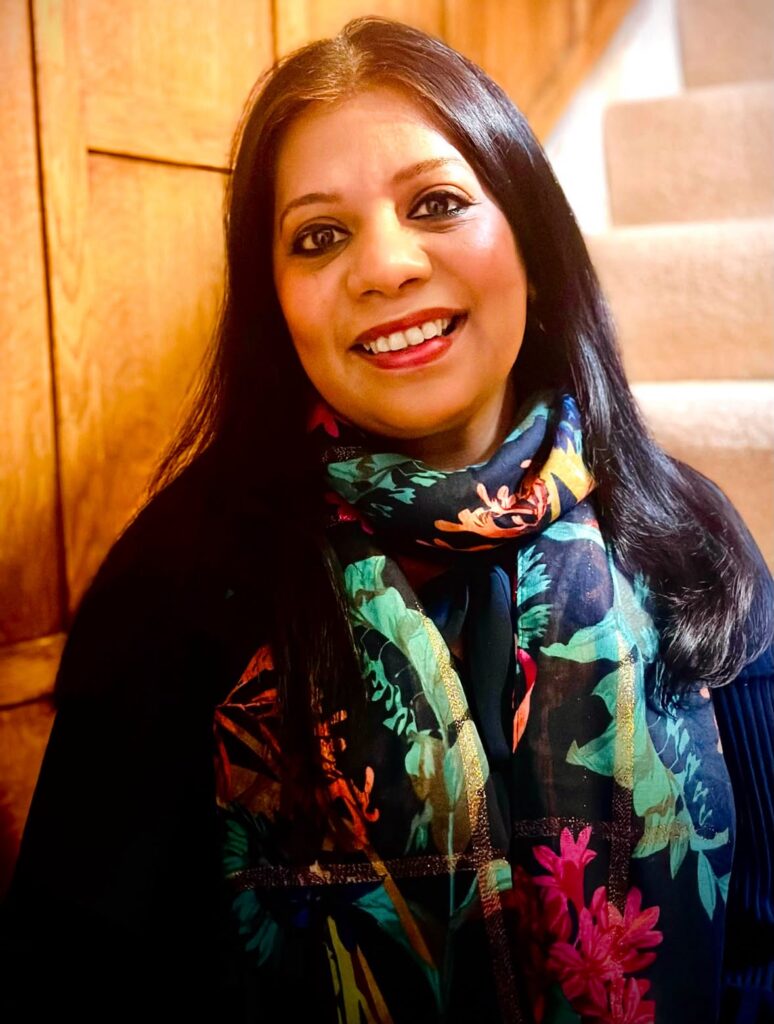
She came from Kolkata about thirty years ago, having studied at Jadavpur University, and did not arrive as a student. She went straight into the job market and took her master’s only once her son was five. She lived in the south of England and in Northern Ireland before the North East.
“Newcastle is definitely my home,” she says. “It’s small enough to know what’s going on, and yet big enough to have plenty to do.”
Her supper club, SHOR.shé, grew out of lockdown cook-alongs with colleagues at Newcastle University. It runs once a month and seats twelve people. That number is a conscious decision, she says, not to overdo it. Twelve is small enough that everyone ends up in the same conversation.
The name carries the same idea. “The shor is basically half of my name,” she explains. “And the she is because it’s an inclusive kitchen and our table is an inclusive table. She in Bengali means they.” It also means mustard, which sits at the centre of Bengali cooking.
What she serves is a deliberate argument. Indian food in Britain, she says, has been flattened into a North Indian menu, and Bengal’s own food and trade history rarely reaches the table. Her next evening, on 20 August, tells the story of her family and the jute trade through her family’s recipes. She has a waiting list of more than ninety people for twelve seats.
“People can talk to each other. They come as strangers, and leave as friends.”
Sharmishta Chatterjee-Banerjee, founder of the SHOR.shé Supper Club
She has never shortened her name. In 2024 she was named on the Northern Power Women power list, reported as the only Indian and the only first-generation immigrant among that year’s thirty recipients, and her supper club has since been written about by Salt and Soil Stories and Cynx.
“I’ve always said originally from India, but British,” she says. “I’ve never lost my identity in my journey of becoming British, and I’m very proud to be both.”
The newest arrival
If Jaswinder is the community’s memory and Sharmistha its table, Saumitra Gore is what has just walked in the door.
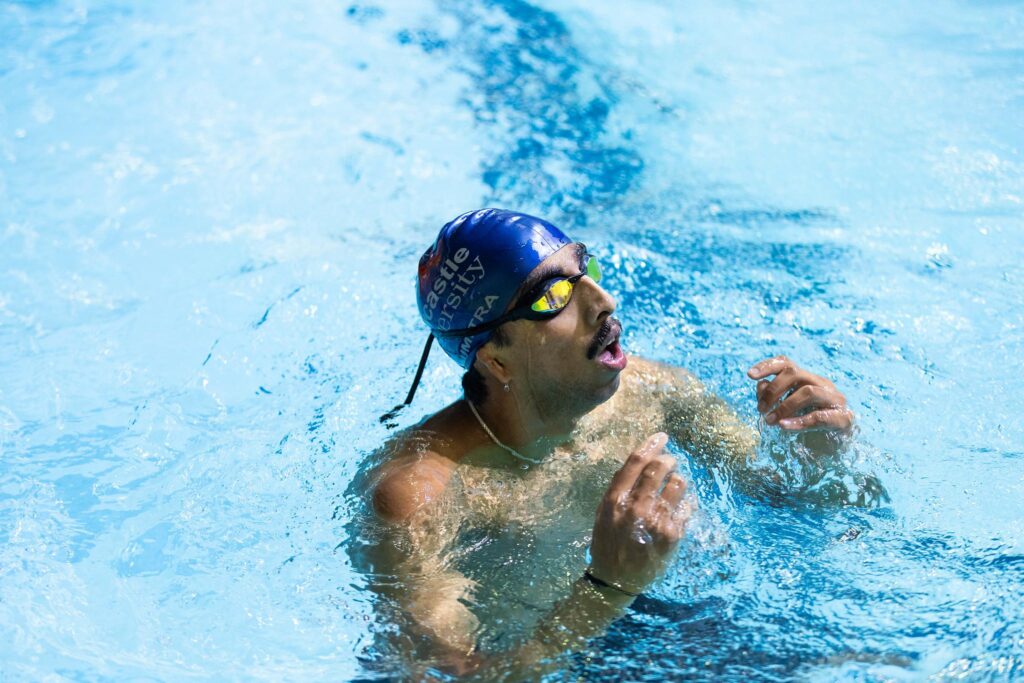
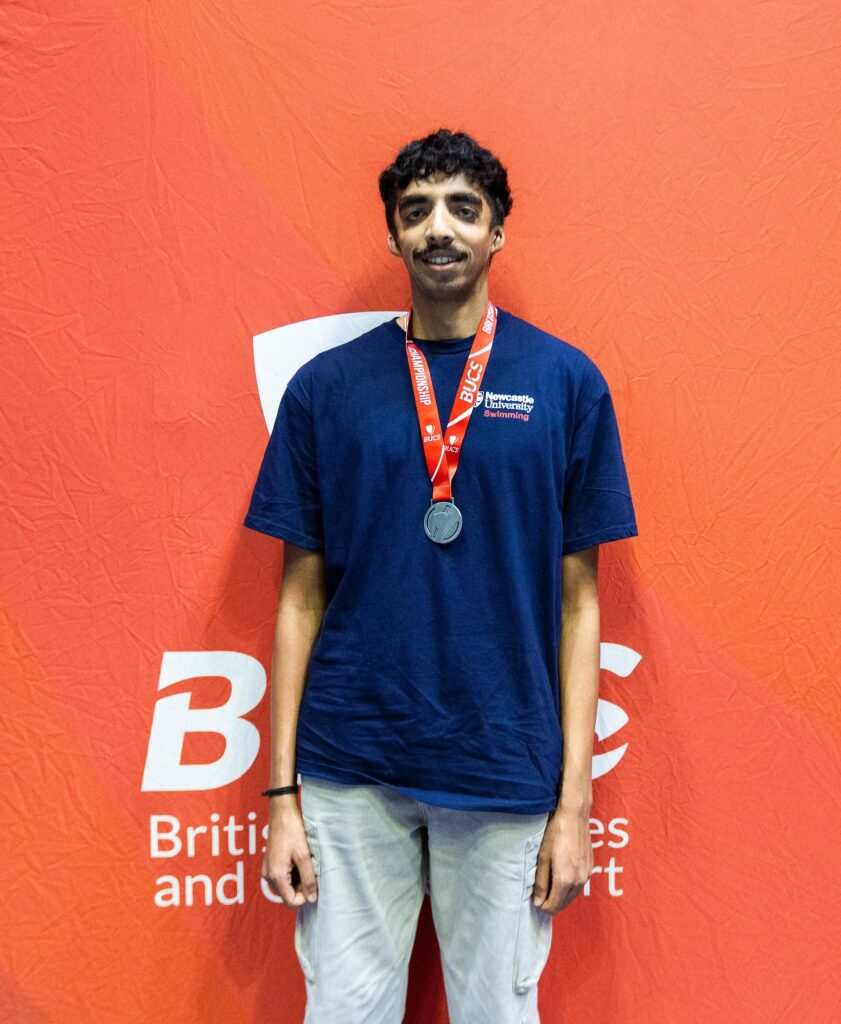
He arrived from Pune last year to study for an MSc in Digital Marketing, having swum for thirteen years and represented India internationally. He picked Newcastle for the cost, and for the swim team.
That decision has already gone into the record books. At the Short Course BUCS Championships he broke three records in the S15 category, in the 50m freestyle, 50m backstroke and 100m freestyle, and took silver in the 100m freestyle. Newcastle University describes them as the first-ever BUCS swimming records achieved by the university. At the long course championships in February he set two more and won a second silver.
Five records and two medals, inside a single academic year. He is now training towards the 2027 World Championships, with Indian team selection expected at the end of this year.
Where it ends, for now
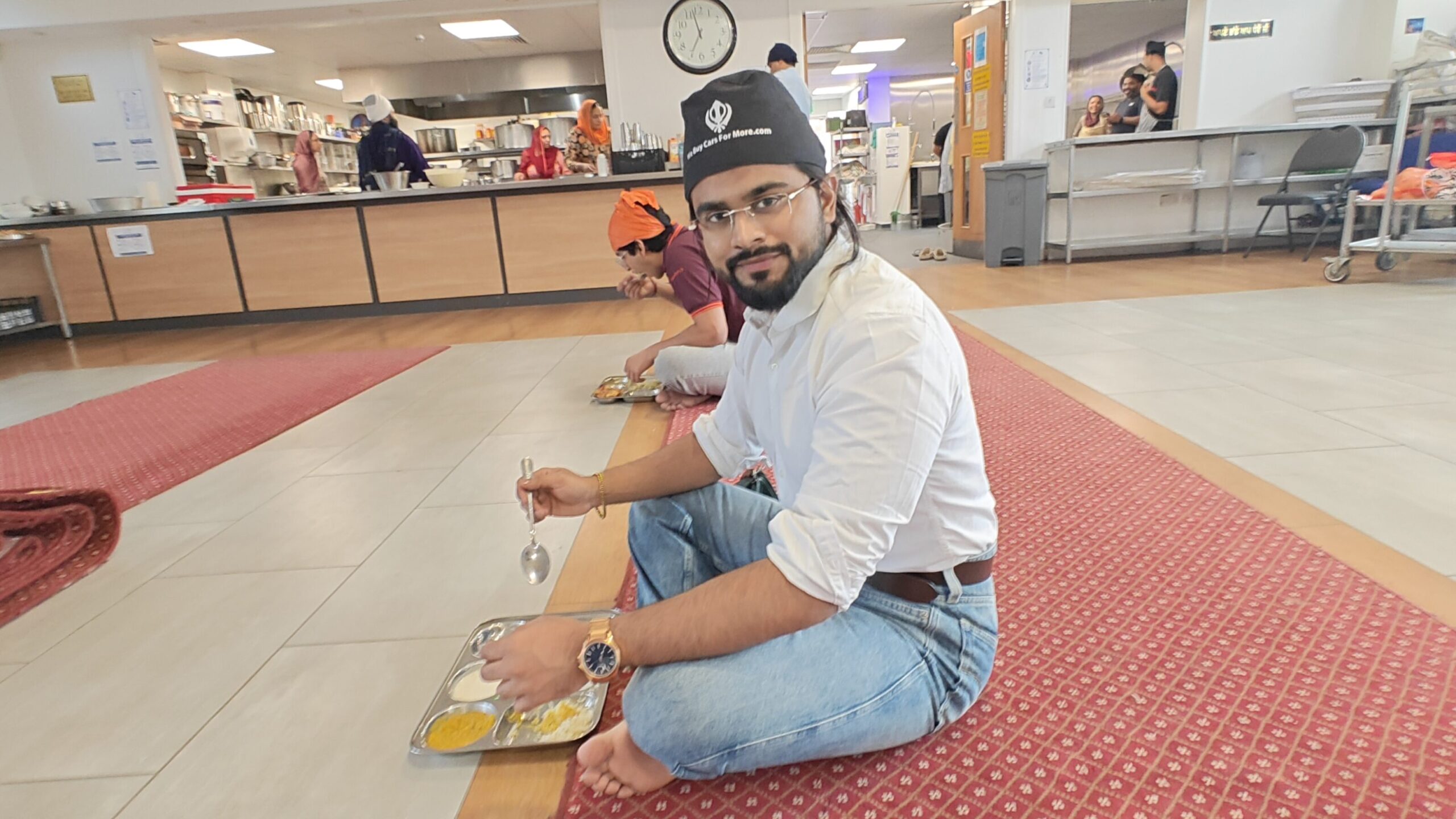
I ended the day sitting on the floor of the langar hall with a plate in front of me, which is how these things tend to end here.
Seventy years ago this community was a few families selling clothes door to door. On 15 August it filled a civic square, and by the afternoon it had gone back to what it does the rest of the year. Cooking for strangers. Feeding students. Training at six in the morning.
The flag comes down at the end of the day. The community does not.
About the author
Ameya Edvankar is a multimedia journalism student at Newcastle University, reporting on the city and the people. Read more about him here.
Follow more of his work on Instagram at @ameyaedvankar and @ameya_frontrow.